26 July 2007

simple observations

As I sit on the upstairs balcony of the Mission House, my senses are overwhelmed by the passing afternoon, by urban Africa.

My ears accept a barrage of noises from a city that seems to be in it’s adolescence. This city, this Joburg, is growing at an incredible clip.

A jackhammer pounds away - at what, I do not know. It is joined by other construction noises coming from the lot across the street, where a narrow strip of African savannah is soon to be replaced by multistory condos, complete with covered parking and an electrified security fence around the perimeter.

The sound of motor cars, squealing breaks, hooting horns, and rumbling diesel engines, never ceases. The South African taxi, the informal instrument of mass transit, spends it’s day hooting away at those walking beside the street. The driver is desperate to fill one of his 16 seats with a customer going his way. If he can attract one, he will earn less than a dollar for the trip, which can be many miles long.

A siren can be heard in the distance. It draws closer. Louder. I watch the BMW hatchback with lights flashing fly by, certainly on it’s way to something gruesome or terrible or, for Joburg, very common. Sirens are not infrequent. There are two sets of police, the fire department, and countless “private security” firms that all race around in response to the astronomical crime rate.

Somewhere in all of the angry noise of the urban landscape, wild Africa still penetrates. A large, gray, sickle-beaked bird (which Willie almost surely incorrectly calls a “doo-da”) sqwuaks and pecks around the grounds here. I assume that it eats worms or bugs or something down in the dirt, as it spends it’s day making an incredible noise and poking it’s perfectly curved beak into the ground. Other, more delicate, birds join the symphony. A bright yellow-bird flutters around chirping innocently. Other colorful birds, some of which look like they must have escaped from a pet store (only they are normal in Africa) play and dance away the day. It has been unseasonably warm lately, lulling the wildlife into thinking that winter is ending and spring is near. I also hear what I think is a frog, although it could be crickets or some other unknown species. It is rhythmic and soothing, nonetheless.
My surreal retreat into the jungle is cut short by a dump truck backing up. It’s song is also rhythmic, although nowhere near as soothing. It is joined by a city bus, gray and double-decked with bold, blue “METROBUS” scrawled along the side, pulling up and stopping in front of the house with the familiar “whoosh” of it’s air-brakes. It is then passed by a yellow Ferrari, roaring down the street. The amount of wealth in this country is stunning. A few days ago, there was a parade of Ferraris through Soweto, one of the most infamous shantytowns in the world. Yesterday, the police responded to a protest in that same Soweto by firing tear gas and rubber bullets at a large gathering of residents who were demonstrating for access to electricity and running water. The wealth chasm here is so wide, so obvious.

A shot rings out. It is closely followed by another . And another. A flock of “doo-da”s scatter and fuss into the air, seemingly displeased by the disturbance. We will assume that in a few minutes a siren will follow the blasts and someone will be rushed to the hospital. The gunshot is easily distinguished form the backfiring car or snap of construction equipment. It rings a little longer. It pops with a different density, a deeper resonance. It, like all of the other noises, has it’s place in Joburg.

The winter, while atypically warm, has been typically dry. This dryness (we haven’t seen as much as a cloud in two weeks) leads to dusty, dirty air. Winds bring sand from the Kalahari Desert and the abundance of diesel fumes hang in the air like a thick brown blanket. Sunrise best showcases the unnatural pollutants in the air. Beams of sunlight are trapped by brown haze, and a foggy mess hangs in between the great hills of the city. The skyline rises up out of the ashes, seemingly growing taller in order to reach the fresh air above.

The air flows in through my nose, irritating every bronchiole. The altitude (6000 feet above sea level) can steal one’s breath quickly. The pollution simply complicates the issue. Stef and I both have shallow coughs at the moment, our bodies reacting to the uninvited particulates that invade our every inhalation.

Also into the nose comes the smell of urban Africa. As it is winter, the scent of burning rubbish hangs loosely in the air. Every evening, the homeless and the unfortunate millions with tin shacks to sleep in gather around fire, for light and heat. Today, the smell of the nearby squatter camps is faint, barely noticeable. Maybe the wind has changed direction. The smell of all sorts of trees is strong as well and even the red dust that clouds the air has an odor. It is difficult to describe, but it seems to have been cross-pollinated with the diesel fumes. It can almost be tasted.

Every so often, one can smell a cheeseburger on the wind. This is not the fantasy of a homesick American. It is, rather, globalization at work. Within a stones throw of the Mission House is McDonalds. And the Big Mac tastes exactly the same. As if that weren’t enough, KFC lies across the street from there, frying up finger-licking good chicken just like the Colonel would have made it.

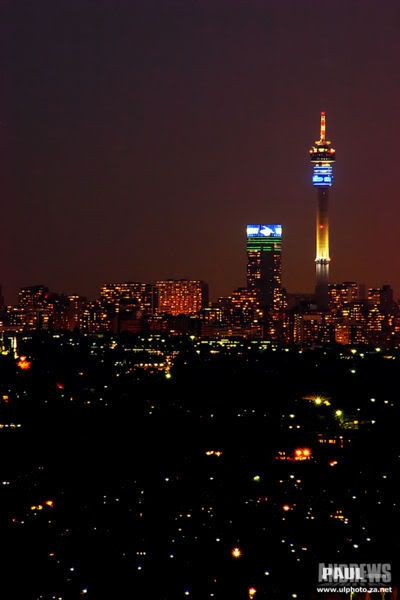
I would be able to see both restaurants from my vantage point on the balcony if not for Campus Square, a relatively new, relatively nice shopping center across the way. It features about 30 shops (banks, restaurants, a grocery store, and drug store) and it is emblazoned with advertisements on it’s otherwise blank back wall. I am confronted by a two-story, black-and-white Virgin Cosmetics advert. In Africa, there are very few places where an ad is not placed. It makes American streets looked positively uncluttered. The days’ news is hung on placards on every streetlight pole available. Every bus and taxi seems to have some place to sell me soap or concert tickets or corn meal. Buildings downtown are ablaze at night, neon towers of persuasive thinking. They light up for cell phone companies and Coca-Cola. They top out the tallest structures in glowing blue, green, yellow, and red. The eyes, sore from the sight of the grimy city below, are drawn to the shimmering spires of capitalism.
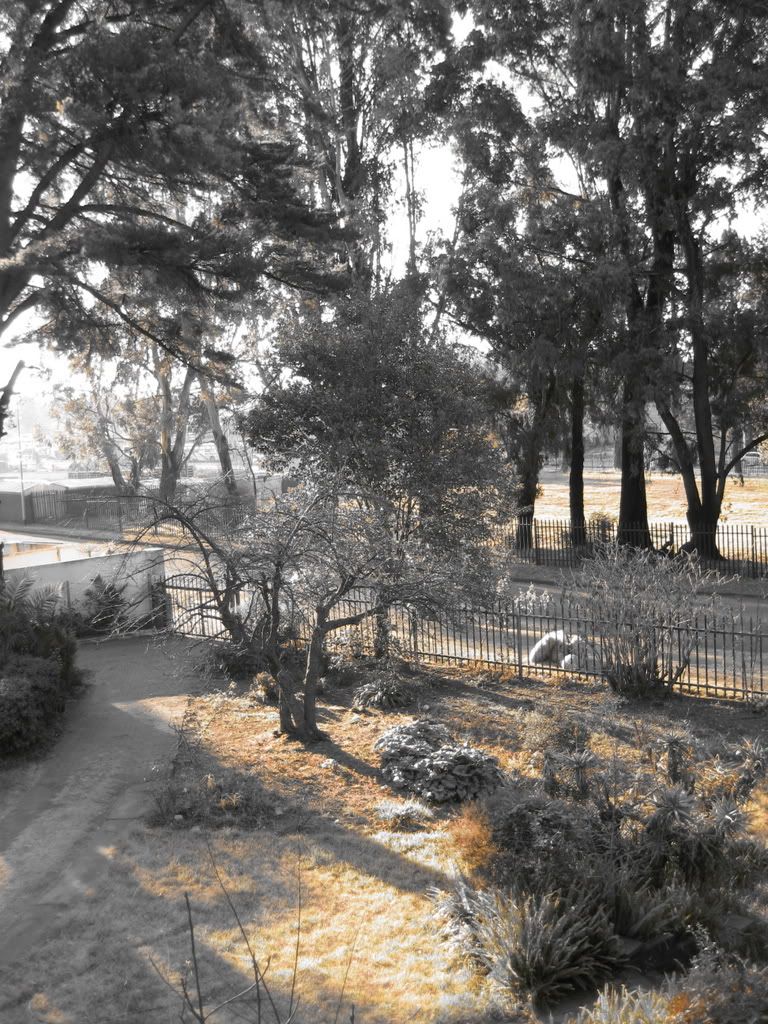
I cough quietly again and consider my place here. In the shadow of 120 foot Australian Blue Gum trees that line Richmond Avenue, home address of the Mission House, I consider just how miniscule I am. The city groans despite me. The trees, they stretch higher without my help. The shopping mall is packed regardless of whether my dollar bills end up there or not. The birds sqwuak and brakes squeal. The taxis hoot for passengers and the police sirens whine for victims.

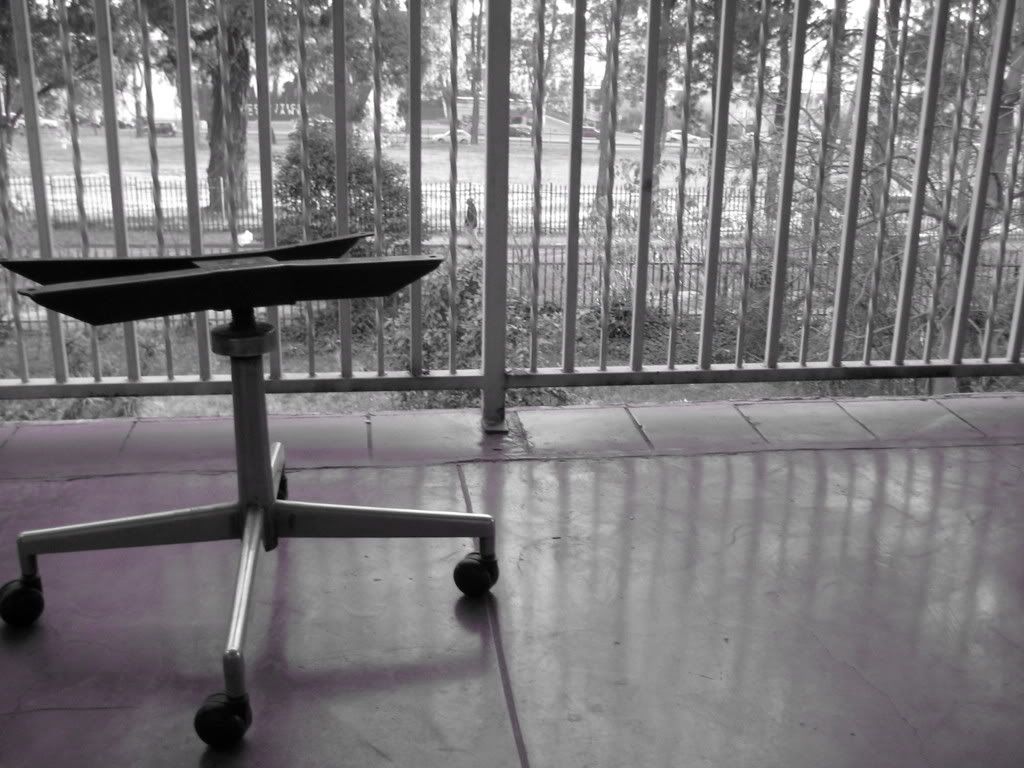
In the midst of all of it, I sit on a plastic lawn chair with my feet propped up on the remnants of a once-proud office chair that has been reduced to a stump - a South African ottoman.
I am unimportant here.

I am one of how many million people - six, eight, twelve? - who call Johannesburg home. We are from America and Europe, from the Middle East and, increasingly, the rest of the decimated African continent. In the middle of all of them, I sit on the balcony, simply observing the world as it passes me by.

25 July 2007

two quick things

1 - You may have noticed that we are updating this blog much more frequently than we said we would. Well, I poked around at church and found that a high-speed USB modem would be cheaper than what the church was paying for dial-up internet. Hence, we've upgraded around here and you have to hear more about us than you ever wanted to.
2 - We are leaving for Kenya on Friday morning. As a result, the blog (and our cell phone) will be silent for about 10 days. We will post one more blog tomorrow morning (a nice one, old-school) and then we'll be back in August.

for the love of money

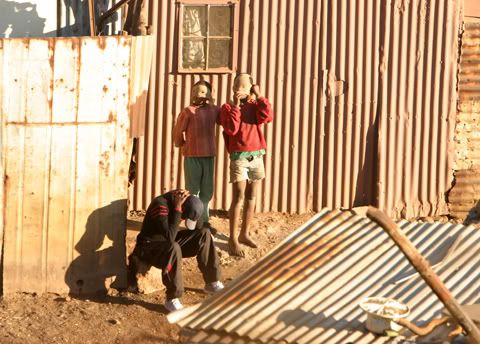
On the way to Soweto, off a dusty two-lane road running out of Johannesburg proper, there is a small squatter village.

It is tucked between a middle class housing development and a bridge that runs over a dry creek bed. The bridge carries the Metro train, which transports the poor to work and provides a cache of victims to criminals whose only work is stealing from those who have income to lose.

As we slowly pass by, the scene is littered with unwashed children, playing in the dust left by the dryness of winter. Their beautiful ebony skin is stained red by the earth, rich with clay. They have likely grown up here, in the shanty town. They have likely never been to a hotel or a shopping mall. Very likely, a majority of them have never set foot in a school.

They play in the dust today, using an amalgamation of strung together used milk cartons as a soccer ball. Truthfully, it is useful only as a distraction from the day at hand.

The shanty town they occupy isn’t particularly terrible as shanties go. The squalor is neither worse nor better than all of the others. A couple of the shacks by the roadside even feature half-walls of brick and cinder-block. They are testaments to the fact that the tin and cardboard shack is not the end of the African ability to dream.

The children scamper around with one of these cinder walls as a backdrop, a gray curtain behind their one act play, their modern tragedy.

The wall is bare but for one line of graffiti, scrawled in deep, forboding blue.

Very simply, it reads, “For the love of money...”

Truth can cut quite deeply, stinging all the way through as it slices towards the soul.

This site, disturbingly unforgettable, reads like the heartbreaking counter to everything the gospel was about, a one-line accusation against all of us who have failed to serve the needs of the least of these due to our own desires. Too harsh? Maybe. Then again, maybe not.

“For the love of money...”

24 July 2007

a psalm for our friend

Amidst all of our weeping and fretting and general sadness about our recently diagnosed friend (HIV+), Stef had the wisdom to open God's Word.

In it, she found a psalm that is the heart of our friend. We are hopeful that it might minister to all of you who are dealing with such things...illness of friends (Tiff)...doubts about your faith...whatever.

Psalm 77

I cried out to God for help;
I cried out to God to hear me.

When I was in distress, I sought the Lord;
at night I stretched out untiring hands
and my soul refused to be comforted.

I remembered you, O God, and I groaned;
I mused, and my spirit grew faint.

You kept my eyes from closing;
I was too troubled to speak.

I thought about the former days,
the years of long ago;

I remembered my songs in the night.
My heart mused and my spirit inquired:

"Will the Lord reject forever?
Will he never show his favor again?

Has his unfailing love vanished forever?
Has his promise failed for all time?

Has God forgotten to be merciful?
Has he in anger withheld his compassion?"

Then I thought, "To this I will appeal:
the years of the right hand of the Most High."

I will remember the deeds of the LORD;
yes, I will remember your miracles of long ago.

I will meditate on all your works
and consider all your mighty deeds.

Your ways, O God, are holy.
What god is so great as our God?

You are the God who performs miracles;
you display your power among the peoples.

With your mighty arm you redeemed your people,
the descendants of Jacob and Joseph.

The waters saw you, O God,
the waters saw you and writhed;
the very depths were convulsed.

The clouds poured down water,
the skies resounded with thunder;
your arrows flashed back and forth.

Your thunder was heard in the whirlwind,
your lightning lit up the world;
the earth trembled and quaked.

Your path led through the sea,
your way through the mighty waters,
though your footprints were not seen.

You led your people like a flock
by the hand of Moses and Aaron.


Praise Him for His perfection.

23 July 2007

happy anniversary to us

Hey!!

Today (Monday the 23rd) is our 2nd wedding anniversary. We are now officially marital veterans. (Pause for laughter...)

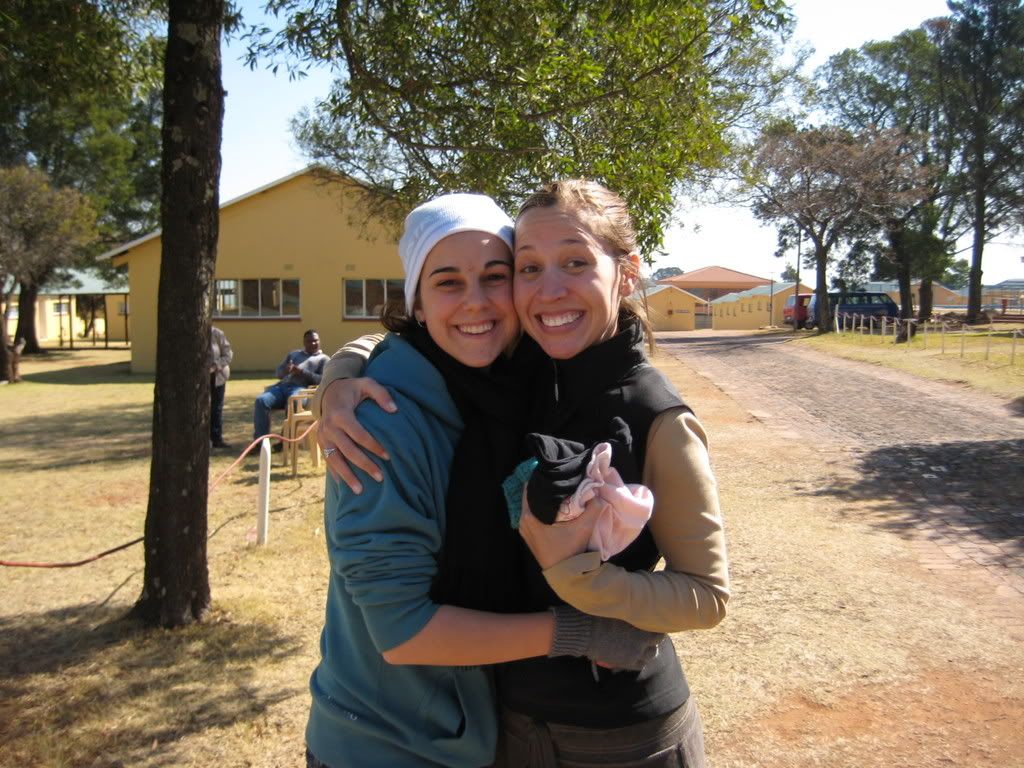
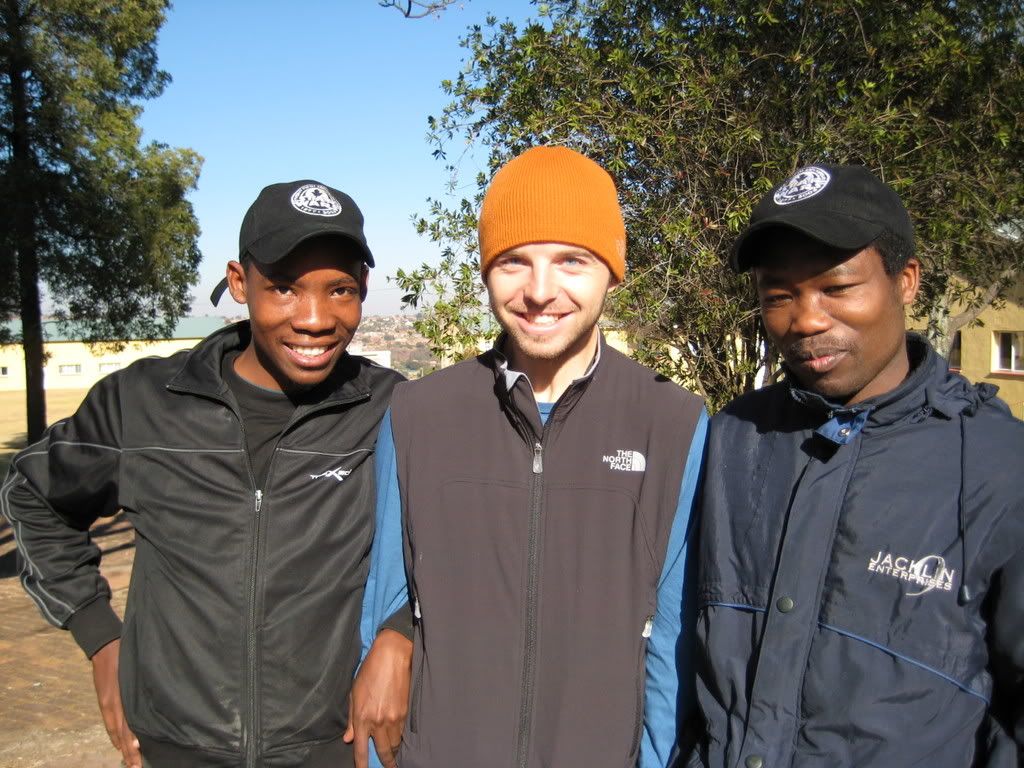
We are celebrating by...well...we'll maybe have lunch together tomorrow. Anyway, enjoy a couple of photos of us with our friends. We should probably take a few with each other. :) We'll take some photos this week and post them on our photo site (link to the left).

The first is Stef with her new Australian friend Lainey. And Kyle is with his best friend Michael and Vusi (aka Section)...


21 July 2007

the missionary diet

I’ve long thought about writing a book entitled, “The Missionary Diet.”

After all, Americans spend between $30 and $50 billion (yes, billion with a “B”) every year on diets and other measures to help us reduce our caloric intake.

And moving to Africa in 2004, I dropped from a skinny 5’10” 155 lb man into an unshaven, skeletal 5’10” 135 lb Bosnian refugee. And it was completely involuntary. I even ate McDonald’s at least once a week. And I would have two Big Macs with my combo meal and a McFlurry for dessert. So, if I can accomplish the real American dream (losing 10% of my body weight) without giving up fast food, I figure that I might share my techniques with you, the reading public.

Over the next few weeks (or months, depending on when we run out of ideas) we’ll be releasing the secrets of “The Missionary Diet,” which is a way for us to share both stories of what everyday life looks like for a missionary and perhaps actual ways to emulate it and look like a refugee yourself. We hope it will prove to be a little “lighter fare” (pun intended) compared to the average update.

Stay tuned.

rich christians excerpt

I promised you an excerpt from “Rich Christians in an Age of Hunger”. This section helped me to visualize the reality of real poverty. Strange how it took this book to help me experience what the people we work with in the squatter camps everyday really live with.

This exercise is hauntingly accurate:

To help us imagine what poverty means, a prominent economist itemized the “luxuries” we would have to abandon if we were to adopt the lifestyle of our 1.2 billion neighbors who live in desperate poverty:
**
We begin by invading the house of our imaginary American family to strip it of its furniture. Everything goes: beds, chairs, tables, television set, lamps. We will leave the family with a few old blankets, a kitchen table, a wooden chair. Along with the bureaus go the clothes. Each member of the family may keep in his “wardrobe” his oldest suit or dress, a shirt or blouse. We will permit a pair of shoes for the head of the family, but none for the wife or children.

We move to the kitchen. The appliances have already been taken out so we move to the cupboards...The box of matches may stay, a small bag of flour, some sugar, and salt. A few moldy potatoes, already in the garbage can, must be hastily rescued, for they will provide much of tonight’s meal. We will leave a handful of onions and a dish of dried beans. All the rest we take away: the meat, the fresh vegetables, the canned goods, the crackers, the candy.

Now we have stripped the house: the bathroom has been dismantled, the running water shut off, the electric wires taken out. Next we take away the house. The family can move to the toolshed...

Communications must go next. No more newspapers, magazines, books - not that they are missed since we must take away our family’s literacy as well. Instead, in our shanty town, we will allow one radio...

Now government services must go. No more postman, no more firemen. There is a school but it is three miles away and it consists of two classrooms...There are, of course, no hospitals or doctors nearby. The nearest clinic is 10 miles away and is tended by a midwife. It can be reached by bicycle, provided that the family has a bicycle, which is unlikely...

Finally, money. We will allow our family a cash hoard of $5.00. This will prevent our breadwinner from experiencing the tragedy of an Iranian peasant who went blind because he could not raise $3.94, which he mistakenly thought he needed to recieve admission to a hospital where he could have been cured.
**

Perspective gained.